In this article
What is high-risk equipment (СПО)?
The Technical Requirements for Products Act (TRPA) lists the types of high-risk equipment (съоръжения с повишена опасност) (Art. 32):
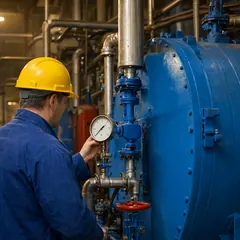
- boilers, pressure vessels, and steam and hot-water piping;
- gas installations, LPG piping and installations, gas transmission and distribution pipelines, natural-gas equipment and appliances, acetylene plants;
- oil and oil-product pipelines;
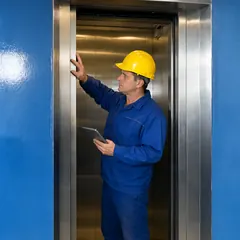
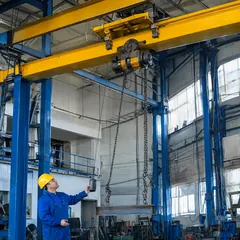
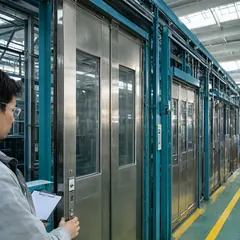
- lifts and lifting equipment;
- cable cars and ski lifts.
Exactly which equipment is covered is set by technical characteristics and parameters in the Council of Ministers ordinances under Art. 31. For example, the pressure equipment ordinance covers steam and hot-water boilers above 116.3 kW, while the lifting equipment ordinance excludes winches and escalators (Art. 3(10) and (12)). The purpose of technical supervision is safe operation (Art. 31(1) TRPA).
Who carries out technical supervision?
Technical supervision is carried out by the chairman of the State Agency for Metrological and Technical Surveillance (DAMTN) through the Chief Directorate “Inspection for State Technical Supervision” (GD IDTN), and by persons or in-house units of companies licensed by the DAMTN chairman. The Act calls them technical supervision bodies (Art. 34(1) TRPA). Licences are issued to persons who supervise under a contract with the user, and to in-house units that supervise their own company's equipment (Art. 34a(1)).
The ordinances say the same: Art. 18 for lifts, Art. 97 for lifting equipment and Art. 253 for pressure equipment. Unannounced inspections are carried out by GD IDTN (Art. 24(6) of the lifts ordinance, Art. 108(10) of the lifting equipment ordinance, Art. 265(4) of the pressure equipment ordinance).
What must a licensed body meet?
An applicant for a licence must (Art. 34a(2) TRPA):
- be a registered company or legal entity and not be insolvent or in liquidation;
- have staff on employment contracts with the required education and qualifications, including at least one holder of a master's degree with at least 5 years' experience in high-risk equipment;
- have the technical means and procedures for supervision;
- not be involved, including through its staff and owners, in the design, manufacture, supply, installation, use, repair or maintenance of the equipment it supervises;
- have a quality management system meeting EN ISO/IEC 17020.
A licensed body must also hold insurance for damage it may cause to owners, users or third parties (Art. 34(3)). The licence lists the types of equipment it covers (Art. 34a(8)(4)). GD IDTN audits licensed bodies once a year (Art. 34b(1)).
What does a technical supervision body do?
- Approves investment designs for sites with high-risk equipment and technical documentation for repairs (Art. 35(1) TRPA).
- Registers equipment within 14 days of receiving the application and documents (Art. 39(2) TRPA).
- Carries out initial, periodic and additional inspections and inspections at the user's request, records the result in the logbook (ревизионна книга) and fixes a sticker on the equipment.
- Informs GD IDTN when equipment is unfit for safe operation (for example, within two days under Art. 277(4) of the pressure equipment ordinance).
| Equipment | Periodic inspection | Legal basis |
|---|---|---|
| Lifts | first 24 months after being put into service, then every 12 months | Art. 24(1)(2) of the lifts ordinance |
| Cranes, work platforms, hoists | within 2 years (up to 10 years old) or 1 year (older); load test every 8 years for cranes, trolleys, electric hoists, excavators and platforms | Art. 108(1)(2)–(3) of the lifting equipment ordinance |
| Pressure vessels and boilers | once every 4 years; strength test every 8 years | Art. 265(1)(2)–(3) of the pressure equipment ordinance |
| Steam and hot-water piping | once every 12 months; strength test every 8 years | Art. 265(1)(2)–(3) |
What are the user's duties, and can the user change the body?
The user is the owner or anyone who uses high-risk equipment under a contract or on another legal basis (§ 1(9) of the Supplementary Provisions of TRPA). The user must register the equipment with a technical supervision body (Art. 39(1) TRPA), ensure its safe operation, keep a file and a logbook, and report every accident to GD IDTN (Art. 46(1)). Equipment that is not registered or has not passed its initial or periodic inspection must not be operated (Art. 46(2)(3)).
The user chooses the licensed body (Art. 20(1)(2) of the Ordinance on the Safe Operation and Technical Supervision of Lifts; Art. 100(3) of the Ordinance on the Safe Operation and Technical Supervision of Lifting Equipment; Art. 257(3) of the Ordinance on the Design, Safe Operation and Technical Supervision of Pressure Equipment) and may change it. The user then registers the equipment with the new body, and the previous body must release the file within 7 days of a written request (Art. 23a for lifts, Art. 105 for lifting equipment, Art. 262 for pressure equipment).
How does it differ from a notified body?
A technical supervision body oversees equipment while it is in service. A notified body assesses a product's conformity with an EU directive before it is placed on the market or put into service. ESTIMA KM Ltd is both: a technical supervision body with licences No. 417, 485 and 834 and Notified Body No. 1829 under Directive 2014/33/EU for lift safety components. More in What is a notified body and on ESTIMA KM licences.
Escalators are excluded from the lifting equipment ordinance (Art. 3(12)), and Bulgaria has no separate ordinance on their technical supervision; see Escalators: technical supervision in Bulgaria. To request an inspection, use ESTIMA KM offices.
A question about technical supervision?
Call or write to us.
Sofia: +359 2 951 54 53 Request an inspectionSources
- Technical Requirements for Products Act — Art. 31–35, 39, 46, § 1, pt. 9 of the Additional Provisions
- Ordinance on the Safe Operation and Technical Supervision of Lifts — Art. 18, 20, 23a, 24
- Ordinance on the Safe Operation and Technical Supervision of Lifting Equipment — Art. 3, 97, 100, 105, 108
- Ordinance on the Design, Safe Operation and Technical Supervision of Pressure Equipment — Art. 253, 257, 262, 265, 277
This article is for information and does not replace the text of the legal act.